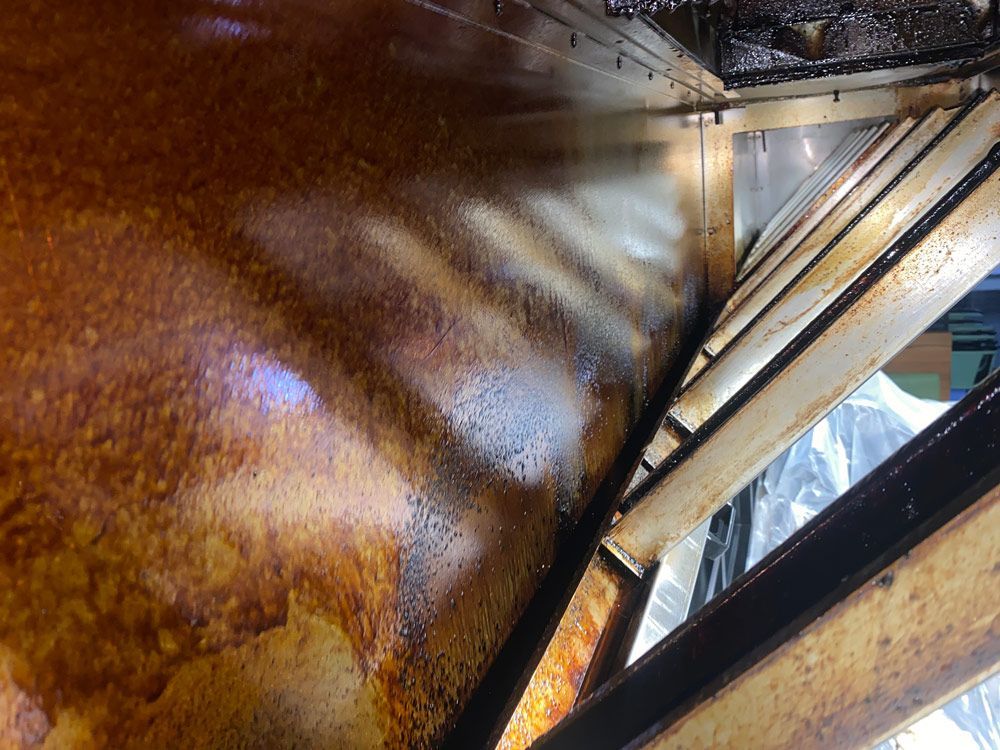

Mould in HVAC Systems: A Guide for Facilities Managers
Mould in HVAC systems is one of the most common hygiene problems we see in commercial buildings across South East Queensland, where warm, humid conditions give spores everything they need to settle and grow inside air conditioning plant. At Efficient Hygiene Services, we help facilities managers on the Gold Coast and in Brisbane find, remove and prevent HVAC mould, and this guide explains how it gets in, why it matters and what a proper assessment and clean looks like.
Key Takeaways
- Mould inside an HVAC system can spread contamination through the ducts into every occupied space, affecting indoor air quality and damaging components from coils to fan housings.
- Moisture, warmth and organic dust inside air conditioning systems create ideal conditions for mould growth, and South East Queensland's humid, coastal climate makes that risk persistent.
- Effective control needs a proper assessment, remediation by trained specialists and ongoing preventive maintenance.
- Disturbing HVAC mould without containment can make the problem worse, so extensive contamination is a job for professionals.
- Efficient Hygiene Services brings 10+ years of experience, and every service is undertaken or supervised by a NADCA member, an ASCS and a Ventilation Systems Mould Remediator (VSMR).
How Mould Gets Into Commercial HVAC Systems
Mould gets into commercial HVAC systems because spores are already in the air around every building, and the system gives them moisture, warmth and a food source to grow on. At Efficient Hygiene Services, we trace most HVAC mould problems on the Gold Coast and in Brisbane back to a handful of predictable entry points and conditions:
- Spore ingress through air intakes and return grilles. Outside air intakes draw in spores with fresh air, and return grilles pull in spores already circulating inside the building. Where filtration is poor or air bypasses the filter, spores settle on internal surfaces.
- Condensation on cooling coils and drain pans. Warm, humid air meeting cold coils creates condensation as a matter of course. If drain pans, traps or condensate lines don't drain properly, standing water builds up and becomes a breeding ground.
- Sweating ductwork. Missing or damaged insulation lets cold duct surfaces sweat in humid ceiling spaces, wetting duct linings and surrounding materials.
- Coastal humidity. Buildings across Brisbane, the Gold Coast and the Sunshine Coast deal with humid conditions for much of the year, so moisture inside HVAC components is a constant rather than occasional issue.
- Organic food sources. Construction dust, fit-out debris, skin cells and fibres collect on coils, in ducts and across filter banks, giving mould something to feed on wherever moisture is present.
If you'd like more detail on what else builds up inside a neglected system, see our article on common contaminants found in dirty HVAC systems.
Why Mould in HVAC Systems Matters for Facilities and Asset Managers
Mould inside HVAC infrastructure is an operational, compliance and risk issue, not just a cleaning job. At Efficient Hygiene Services, we see the same consequences play out in offices, schools, healthcare sites and government buildings across South East Queensland:
- Indoor air quality. A contaminated system carries mould spores, bacteria and dust through the building, undermining every other effort to deliver clean air.
- Occupant health and comfort. Dust, mould spores and bacteria circulating through dirty HVAC systems can trigger allergies, asthma and respiratory irritation, which matters most in schools, aged care, childcare and healthcare settings.
- Operational efficiency. Dirty coils transfer heat poorly and clogged filters restrict airflow, so the system works harder, uses more energy and wears faster.
- Reputation and compliance. Musty odours, staining around diffusers and repeated complaints can escalate quickly in tenanted and public buildings.
- Asset life. Untreated mould and moisture can corrode metal components, degrade insulation and block condensate systems, leading to expensive repairs or early replacement.
For a closer look at the health side, our article on the possible health impacts of exposure to mould covers it in more depth.
Early Warning Signs of Mould in Your HVAC System
The earliest signs of HVAC mould are usually a musty smell at start-up, staining around vents and recurring water problems. Building managers who walk their sites regularly are well placed to spot them, and at Efficient Hygiene Services we'd encourage facilities teams on the Gold Coast and in Brisbane to watch for:
- Musty or damp smells when the system first starts in the morning or after a weekend shutdown
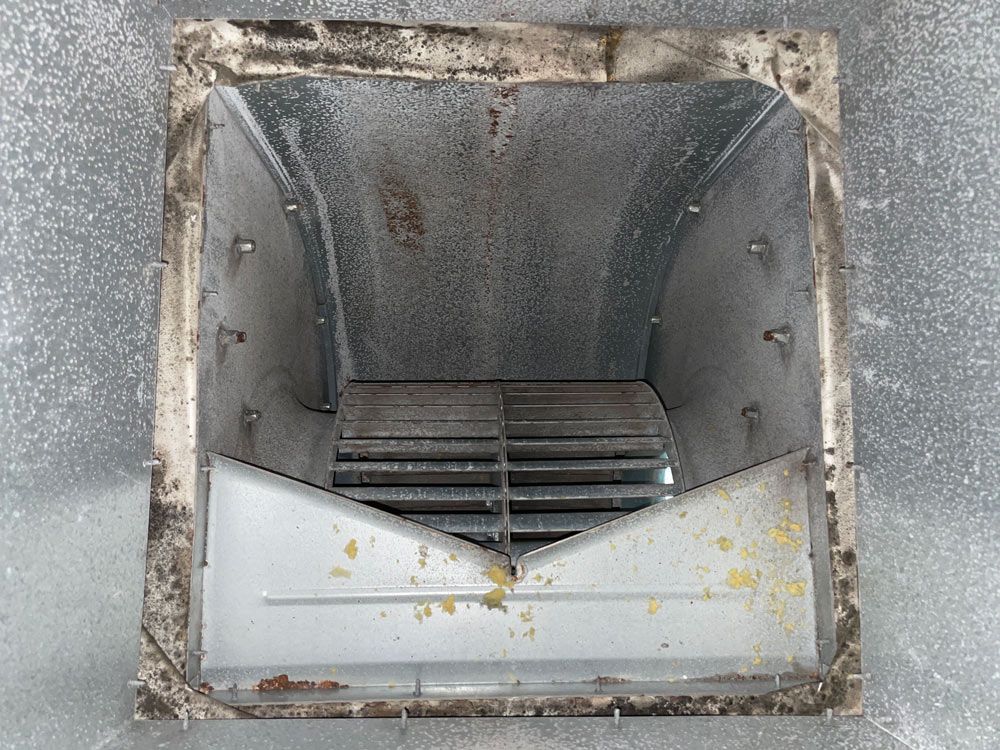
- Dark staining or discolouration on supply diffusers, return grilles, nearby ceiling tiles or inside accessible duct sections
- Rooms that feel stuffy or humid even while the system is running
- Increased dust around vents and on surfaces, suggesting dirty air is circulating
- Recurring condensate overflows, rust or water marks around air handling units and fan coil units
Any of these should prompt a closer look rather than waiting for the next scheduled service. Our article on the signs of mould in aircon covers what to look for in individual units.
Common HVAC Design and Maintenance Issues That Drive Mould
Many HVAC mould problems start with a design or maintenance gap rather than a breakdown. At Efficient Hygiene Services, these are the root causes we most often find when inspecting commercial systems across South East Queensland:
- Oversized or poorly balanced systems. A unit that short-cycles never runs long enough to properly dehumidify the air, so ducts and coils stay cool and damp.
- Damaged or missing insulation. Uninsulated ductwork sweats in humid ceiling spaces and plant rooms, wetting duct surfaces and linings.
- Infrequent filter changes. Clogged filters let organic debris pass onto coils and into ducts, where it becomes both food and a moisture trap for mould.
- Poor drainage. Drain pans with the wrong fall, blocked traps or sludge-filled condensate lines hold water inside the unit.
- No internal hygiene checks. Many maintenance schedules cover mechanical performance but never open access panels to look at internal hygiene, so contamination develops unnoticed for years.
Assessing Mould in HVAC Systems: Inspection and Testing
A proper assessment always comes before remediation, because you can't scope an effective clean without knowing how far the contamination goes. Every Efficient Hygiene Services job begins with a detailed inspection, whether the building is in Southport, Robina, the Brisbane CBD or Ipswich.
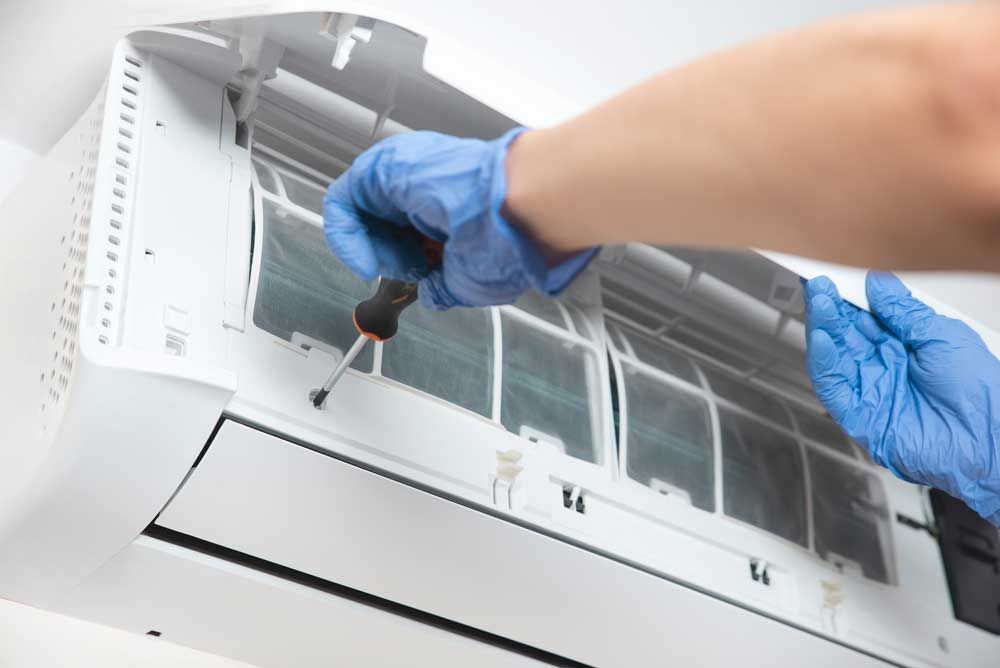
- Internal inspection. Our technicians open access panels and examine coils, drain pans, fan housings and representative sections of ductwork and plenums.
- Video scope and photographic evidence. We use video scopes, high-powered lights and photography to document conditions inside ductwork you can't physically reach. Before-and-after images give clear transparency and pinpoint problem areas such as mould patches or moisture damage.
- Sampling when warranted. Where the situation calls for it, we can carry out standard, microbiological and advanced indoor air quality tests to understand the type and extent of contamination.
- Building and moisture review. In complex buildings, the assessment extends to airflow, outside air intakes and moisture sources in plant rooms, ceiling spaces and duct connections.
- Qualified oversight. Our work is undertaken or supervised by a NADCA member, an Air Systems Cleaning Specialist (ASCS) and a Ventilation Systems Mould Remediator (VSMR), and we're IICRC certified.
How Professional HVAC Mould Remediation Works (R.O.S.E. Method)
Professional HVAC mould remediation isolates the system, captures loose contamination under negative air, physically removes mould and debris, then treats and verifies the result. At Efficient Hygiene Services, we do this with our R.O.S.E. method, so facilities managers know exactly what to expect.
Ready
- Initial inspection, documentation and safe shutdown of the affected HVAC zones
- Containment barriers set up to protect work areas and occupied spaces
Open
- Vents, registers, air handler panels and access points opened
- Negative air pressure established so contaminants are captured and not released into occupied spaces
Scrub
- Mechanical agitation of coils, fan housings, drain pans and duct interiors to dislodge mould, biofilm and debris
- HEPA vacuums extracting contaminants from every accessible surface
Ensure
- Approved antimicrobial treatments applied to suppress mould and bacteria
- UV-C disinfection used in sensitive environments needing additional hygiene
- Air quality verification and photographic evidence of cleanliness
Cleaning alone won't hold if the moisture source stays in place, so we also clear drainage issues and give recommendations for ongoing moisture control.
Key Components That Need Attention During HVAC Mould Cleaning
An HVAC mould clean needs to cover every component where moisture and dust meet. At Efficient Hygiene Services, these are the parts we pay closest attention to on commercial sites across the Gold Coast and Brisbane:
- Cooling and heating coils. Dust and biofilm on coils trap moisture and restrict airflow, so clean fins are essential for performance.
- Condensate drain pans, traps and lines. Standing water is one of the most common moisture sources inside an air handler. Clearing blockages and checking drainage removes a primary mould habitat.
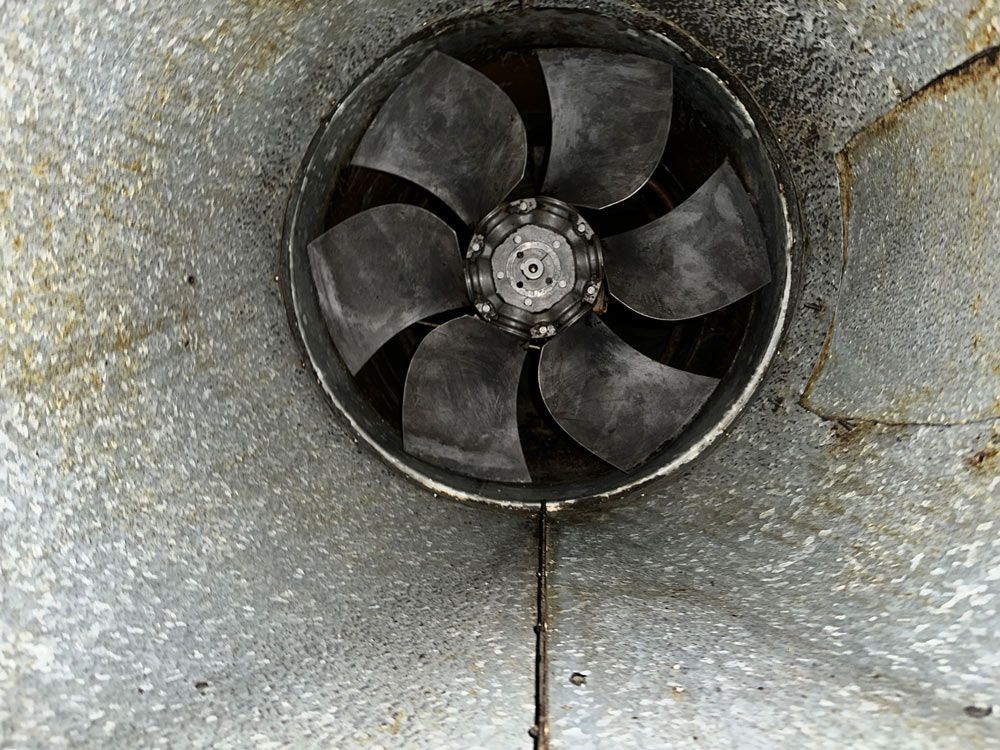
- Fan housings and blower assemblies. These sit in the damp airstream after the coils, and mould here pushes odours and spores straight into supply air.
- Supply and return ducts. Rigid metal ducts can usually be cleaned effectively, while some porous linings or heavily damaged flexible duct may need replacing. That decision should come from an inspection, not a guess.
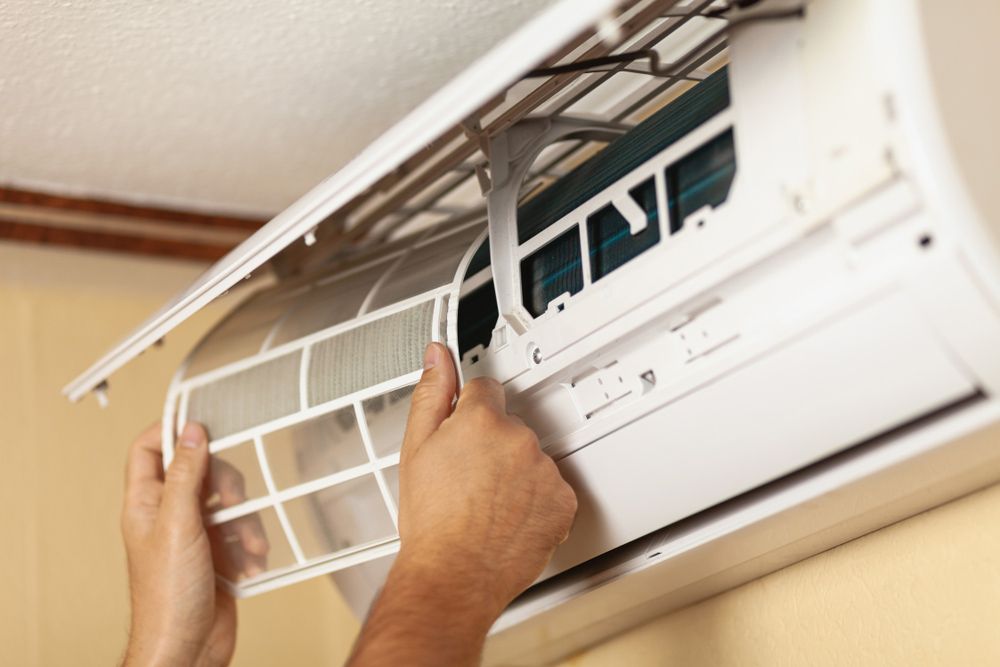
- Filters, housings and outside air intakes. Correct filtration and proper sealing reduce the dust that reaches downstream components and limit mould's food supply.
Integrating HVAC Mould Remediation with Whole-Building Management
HVAC mould remediation works best when it's coordinated with the rest of the building's maintenance and works programme. At Efficient Hygiene Services, we plan remediation around facilities teams on the Gold Coast, in Brisbane and across South East Queensland so the result lasts.
- Sequence of works. Where walls, ceilings or carpets are also affected, the HVAC clean should generally follow that remediation so the system isn't recontaminated.
- Staged shutdowns. We schedule work during off-hours, after hours or on weekends and stage it zone by zone to minimise disruption to tenants, students or patients.
- Occupant communication. Letting occupants know what's happening, when, and what to expect reduces complaints and builds confidence.
- Documentation. Our photographic evidence and reports slot into your asset and risk registers, creating a verifiable record for future planning.
- Proactive checks. Building internal HVAC hygiene checks into regular condition audits catches problems before occupants notice them.
Preventing Mould from Returning in Commercial HVAC Systems
Preventing HVAC mould from returning comes down to controlling moisture, managing dust and checking inside the system regularly. At Efficient Hygiene Services, we help facilities managers set up preventive programmes that suit each building.
- Scheduled hygiene checks. The right interval depends on system type, use, occupancy and local conditions. We assess your system and recommend a tailored maintenance schedule, with reminder services so nothing slips.
- Filtration review. Make sure filter types suit the building's use. A standard office has different needs to a healthcare facility or school, and we can recommend and supply the correct filter.
- Drainage and moisture management. Maintain correct drainage, inspect condensate lines and fix leaks and water ingress promptly. In damp areas, dehumidification can help keep conditions in check.
- Insulation and duct condition. Repair damaged insulation and leaking duct joints that let humid air in.
- UV-C in sensitive environments. UV-C can provide ongoing microbial control near coils, as a supplement to physical cleaning rather than a replacement.
- Record keeping. Documenting conditions and photos at each visit reveals patterns, such as recurring moisture sources or components that need more frequent attention.
Choosing an HVAC Hygiene Specialist in South East Queensland
The right HVAC hygiene specialist will have mould-specific credentials, the equipment to contain contamination and a habit of documenting everything. Here's what we at Efficient Hygiene Services suggest looking for:
- Relevant credentials. Look for NADCA involvement, Air Systems Cleaning Specialist (ASCS) and Ventilation Systems Mould Remediator (VSMR) qualifications, and IICRC certification.
- Appropriate equipment. Negative air machines, HEPA vacuums and antimicrobial treatments suited to HVAC materials, not general-purpose chemicals.
- Detailed reporting. Before-and-after photos and clear descriptions of what was inspected, cleaned and treated.
- Proven experience. Efficient Hygiene Services has 10+ years of experience across the Gold Coast, Brisbane and South East Queensland. All services are undertaken or supervised by a NADCA member, an ASCS and a VSMR, and our technicians are fully insured and police checked.
Ready to sort it out? Call Efficient Hygiene Services on 1300 222 357 to discuss an HVAC hygiene assessment or remediation plan for your building.
FAQs About Mould in HVAC Systems
How often should a commercial HVAC system be checked for mould?
It depends on the building's use, the system and its environment. Higher-risk sites, such as healthcare facilities and buildings with a history of moisture problems, warrant closer attention. Musty odours, leaks or staining around vents should always trigger an inspection straight away. Efficient Hygiene Services can assess your system and recommend a tailored schedule, prioritising higher-risk buildings if you manage several sites.
Can in-house maintenance teams clean mould from HVAC systems themselves?
In-house teams can handle light tasks such as replacing filters, cleaning external grilles, reporting leaks and monitoring humidity. Internal HVAC mould remediation is different: it needs containment, negative air and HEPA extraction, because disturbing mould inside ducts or coils without them can spread spores further through the building. For anything beyond routine filter and grille care, bring in an HVAC hygiene specialist.
Is shutting down the HVAC system enough to stop mould growth?
No. Turning the system off doesn't remove existing mould, and if the moisture source, such as a blocked drain or sweating duct, isn't fixed, growth can carry on and spread again when the system restarts. Effective control means fixing the moisture problem, physically removing contamination and applying antimicrobial treatment where appropriate.
Do all mould-affected ducts need to be replaced?
Not necessarily. Rigid metal ductwork can often be cleaned and decontaminated using professional methods. Some porous materials, such as certain internal linings or badly damaged flexible duct, may be more practical to replace. The decision should be based on a site-specific inspection of the contamination, material and access, documented in a report.
How can I arrange an HVAC mould assessment for multiple buildings?
Pull together the basics for each site: location, system types, known issues and any history of odour or mould complaints. From there, a specialist can prioritise the higher-risk buildings and plan a staged programme for the rest. Call Efficient Hygiene Services on 1300 222 357 to discuss multi-site HVAC mould assessments across the Gold Coast, Brisbane and South East Queensland.
Recent Posts