

Book a Free, Same-Day Quote
Thank you for contacting us.
We will get back to you as soon as possible.
Please try again later.
Commercial Mould Removal
- No Call-out Fee
- Free Assessment
- IICRC Certified
- Fully Insured & Police Checked
Why Business & Government Choose Efficient Hygiene Services
100% Customer Satisfaction
All Works Meet Australian Standards
Heavy Investment In Premium Equipment
Real Results, Proven Success
10+ Years of Experience
Meticulous Attention To Detail
Complete Commercial Mould Removal Guide for Business Owners
As a business owner or facilities manager, nothing derails operations faster than discovering mould growing within your workplace. Commercial mould removal is not just a cleaning task—it’s a specialised professional service that protects your building, your people, and your bottom line. Unlike residential mould issues, commercial mould remediation involves complex systems, multiple stakeholders, regulatory obligations, and the need to keep your business running with minimal disruption.
When mould appears in a commercial setting, our immediate concerns are health liability, staff safety, customer perception, and the potential cost of downtime. That’s why you need
Efficient Hygiene Services to carry out a fast, compliant, and fully documented Commercial Mould Removal process that aligns with business risks and operational needs.

What This Guide Covers
This guide walks you through the critical elements of
commercial mould remediation, helping you understand:
- how commercial mould is identified and assessed
- what professional removal involves
- the safety and compliance processes behind remediation
- advanced mould treatment techniques
- ongoing prevention and maintenance strategies
Who This Is For
This information is ideal for:
- business owners
- commercial property managers
- facility managers
- operations directors
- multi-site managers
- strata/building managers
- government agencies
Whether you run a small office, large warehouse, educational facility, healthcare centre, retail precinct, or industrial site—this guide provides practical, business-centred advice for tackling mould safely and efficiently.
Why This Matters
Mould issues in a commercial building are more than an inconvenience—they can:
- force part-closure or complete shutdown
- trigger staff health complaints or workers' compensation claims
- damage stock, equipment, and infrastructure
- breach insurance conditions
- compromise indoor air quality and WHS compliance
- escalate into large-scale structural repairs if ignored
In high-risk commercial environments, black mould or widespread fungal contamination must be addressed immediately. Early intervention not only prevents extensive damage but also protects business continuity and reduces operational risk.
Understanding Commercial Mould Problems
Commercial mould contamination occurs when airborne fungal spores take hold in moisture-affected areas, allowing mould colonies to spread through workspaces, voids, and HVAC systems. Beyond visible mould patches, hidden contamination can impact air quality, trigger respiratory issues, and cause long-term structural damage.
Commercial environments present added challenges because:
- they contain larger, more complex HVAC systems
- building materials vary widely (ceilings, tiles, timber, carpet, insulation, etc.)
- occupancy levels can increase humidity
- plumbing and mechanical systems create multiple leak points
- operations can’t afford prolonged downtime
- mould can spread quickly through shared ventilation
From isolated break rooms to multi-storey air circulation systems, the spread can be surprisingly fast. Early detection and professional remediation are essential to prevent building-wide contamination.
Common Commercial Environments Affected
Office Buildings
Meeting rooms, reception areas, kitchens, bathrooms, HVAC vents, storage areas, windows, and carpeted spaces are common trouble spots—especially in areas with temperature fluctuations or poor ventilation.
Retail Spaces and Shopping Centres
Loading docks, storerooms, inventory areas, change rooms, and customer bathrooms often develop mould due to frequent traffic, moisture entering from outside, and high humidity near refrigeration or equipment.
Warehouses and Industrial Sites
Large open areas, roof spaces, cool rooms, concrete slabs, and mechanical rooms can trap moisture. Leaks often go unnoticed until contamination becomes significant.
Schools, Childcare Centres, Universities
Young and vulnerable populations increase risk, requiring fast, compliant remediation.
Healthcare Facilities and Aged Care
Mould exposure can pose serious health risks for immune-compromised individuals, making rapid, medically safe remediation essential.
Older buildings, poorly ventilated spaces, and high-moisture activities dramatically increase mould risk.


Business Impact of Commercial Mould
Lost Revenue & Reduced Operational Capacity
Even a partial closure affects customers, staff workflow, and productivity.
Staff Health & Liability Risk
Mould exposure can cause allergic reactions, asthma complications, skin irritation, and respiratory issues—leading to workers’ compensation claims and increased sick leave.
Insurance & Regulatory Compliance
Most commercial insurance policies require immediate professional remediation. Delays can:
- void your coverage
- increase premiums
- escalate damage costs
Fast, compliant Commercial Mould Removal from Efficient Hygiene Services is essential to protect your business investment and maintain operational continuity.
Causes of Mould Growth
In commercial properties, mould growth typically stems from:
- high humidity levels
- plumbing leaks or roof leaks
- faulty HVAC systems
- condensation on windows, walls, and ceilings
- inadequate ventilation
- spills or water intrusion that weren’t dried correctly
- cold spots caused by poor insulation
- long operational hours without airflow
Commercial building materials—like carpets, ceiling tiles, MDF, drywall, and insulation—absorb moisture and allow mould to grow unnoticed behind surfaces.
Preventing mould starts with controlling moisture. Regular inspections, proper ventilation, leak repairs, humidity control, and routine cleaning can significantly reduce the risk of mould taking hold.
Commercial Mould Removal Process
Initial Assessment and Inspection
The process begins with a comprehensive inspection, including:
- air quality testing to identify airborne spore levels
- infrared and moisture detection to locate hidden leaks
- HVAC and ductwork assessments
- documentation and photography for insurance
- scope of works, timeline planning, and cost forecasting
This assessment allows
Efficient Hygiene Services to map out all affected areas, understand the extent of contamination, and minimise operational disruption through strategic scheduling.
Containment and Safety Protocols
To prevent mould spread during remediation, containment measures are essential:
- plastic sheeting barriers
- negative air pressure chambers
- HEPA filtration
- sealing off ductwork
- controlled access zones
- safe entry/exit routes for workers
Efficient Hygiene Services coordinates with your management team to maintain business continuity wherever possible—adjusting access points or relocating staff around ongoing work.
Removal and Remediation Techniques
Depending on contamination severity, professional techniques include:
HVAC Decontamination
Shutting down systems, cleaning ductwork, vents, handlers, and removing contaminated insulation.
Surface Cleaning & Treatment
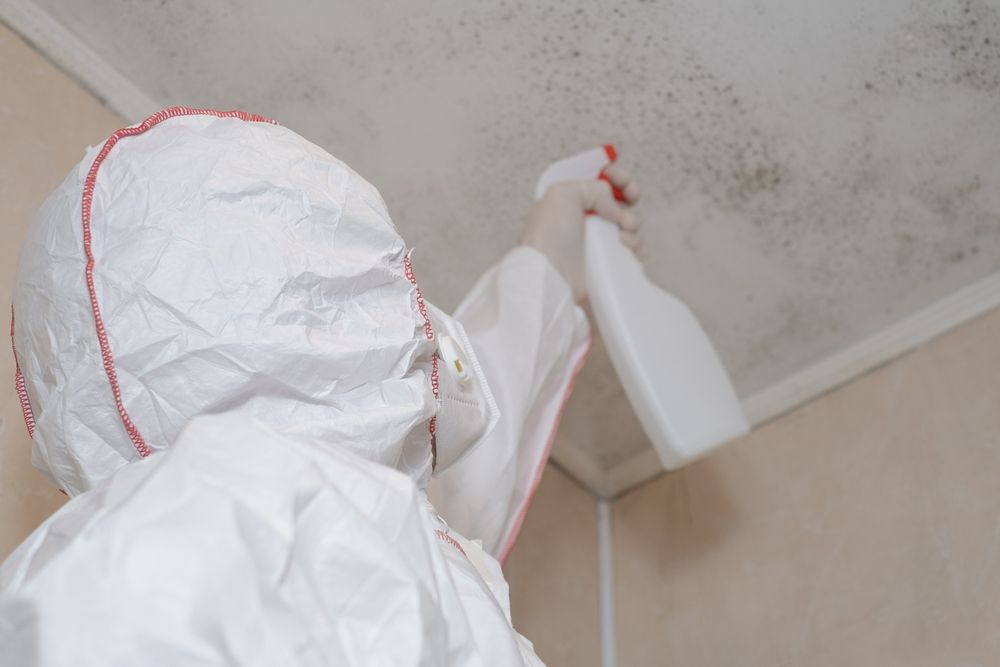
Using HEPA vacuums, antimicrobial agents, commercial mould removers, and manual scrubbing to remove mould from:
- tiles
- grout
- walls
- ceilings
- timber
- concrete
- fixtures
Stain Removal & Protective Coatings
Non-toxic sealants and protective barriers help prevent mould returning after cleaning.
Material Removal & Replacement
Porous materials like carpets, ceiling tiles, insulation, or heavily contaminated plasterboard may require removal and reinstatement.
Advanced Commercial Remediation Techniques
Step-by-Step: Emergency Commercial Mould Response
When mould threatens business operations:
- Immediate Isolation – containment within 2 hours
- Professional Assessment – full evaluation within 24 hours
- Operations Planning – maintaining essential business functions
- Rapid Remediation – multiple teams, extended hours to restore operations fast
Comparison: In-House vs Professional Remediation
| Feature | In-House Approach | Professional Remediation |
|---|---|---|
| Equipment | Basic sprays & tools | Industrial HEPA systems, commercial antimicrobials |
| Expertise | General maintenance | Trained, certified technicians |
| Liability | Limited coverage | Full insurance + compliance documentation |
| Time | Longer, less predictable | Fast, efficient, minimal downtime |
| Insurance | Often non-compliant | Meets policy & WHS requirements |
Professional remediation by Efficient Hygiene Services ensures the job is completed safely, thoroughly, and in line with commercial standards.
Preventing Future Mould Growth
Effective prevention requires a proactive approach, including:
- commercial-grade mould protection products
- proper ventilation and humidity control
- regular cleaning and drying routines
- fixing leaks immediately
- inspecting insulation to prevent condensation
- ongoing HVAC maintenance
Health Risks
Prolonged exposure to mould can lead to:
- allergies
- asthma flare-ups
- respiratory irritation
- skin issues
- increased sick leave among staff
Ongoing Maintenance
To reduce risk, businesses should:
- implement regular inspections
- keep humidity controlled
- clean and dry high-moisture areas
- use mould removers as needed
- maintain ventilation
- address leaks promptly
A strong maintenance routine ensures long-term indoor air quality and protects staff wellbeing.
Common Commercial Mould Challenges and Solutions
Minimising Business Downtime
- Solution:
After-hours scheduling, weekend work, rapid containment, and staged remediation to keep parts of your business operating.
Insurance and Compliance Requirements
- Solution: Efficient Hygiene Services provides complete reporting, photos, and compliance documentation for insurers and regulators.
Large-Scale, Multi-Site Contamination
- Solution: Industrial equipment, multi-crew deployment, advanced containment, and coordinated treatment across multiple building zones.
Commercial Case Study: Rapid Mould Remediation for a Brisbane Office Building
Client Overview
A national professional services firm operating out of a seven-storey commercial office building in Brisbane CBD contacted us after staff began reporting musty odours, sinus irritation, and visible mould patches appearing near ceiling tiles on Levels 3 and 4. The building housed more than 180 employees across multiple departments, with meeting rooms, high-traffic corridors, HVAC-fed open-plan workspaces, and a shared kitchen area.
With Brisbane's humid weeks preceding the incident and a series of intermittent roof leaks after heavy rain, the business required immediate commercial mould removal to protect staff health and maintain operational continuity.
Services Requested
They engaged Efficient Hygiene Services for:
- rapid site assessment
- commercial-grade mould remediation
- HVAC inspection and decontamination
- compliance reporting for the property owner and insurance provider
- after-hours remediation scheduling to prevent business disruption
Problem Summary
Key Issues Identified
- Significant mould growth along ceiling cavities on Levels 3 & 4
- Elevated airborne spore counts detected through air quality testing
- Moisture trapped in insulation due to a minor roof membrane failure
- Cross-contamination risk via the building’s HVAC system
- Staff reporting respiratory symptoms and increased sick leave
- Urgent need to prevent full or partial floor closure
Without immediate intervention, the business risked:
- temporary shutdown of two floors
- workers’ compensation claims
- compromised hygiene standards
- insurance non-compliance due to delayed action
Assessment & Inspection
Efficient Hygiene Services dispatched a commercial remediation team.
Our on-site inspection included:
- thermal imaging to locate hidden moisture pockets
- moisture readings across ceiling tiles, plasterboard, and carpets
- inspection of ductwork and supply/return vents
- air quality sampling to determine airborne spore levels
- photographic documentation for insurance
We mapped out all affected areas and determined that the mould had infiltrated:
- ceiling tiles
- insulation above the suspended ceiling
- HVAC supply vents feeding multiple work zones
- wall cavities near the source of the roof leak
Remediation Strategy
Given the building’s high occupancy and need to maintain operations, we developed a phased remediation plan with after-hours execution.
Immediate Containment
- Full containment zones built on Levels 3 & 4
- Negative air pressure systems installed to stop spore drift
- Ductwork temporarily sealed
- Safe access routes maintained for staff
Commercial-Grade Removal & Treatment
- Removal of damaged insulation and ceiling tiles
- HEPA vacuuming of all surfaces
- Antimicrobial treatment across walls, ceilings, vents, and structural framing
- Application of a long-lasting mould prevention coating on treated surfaces
- Air scrubbers deployed for continuous airborne spore capture
HVAC Decontamination
- Internal cleaning of ducts, coils, vents, and air handlers
- Replacement of contaminated filters
- Rebalancing of airflow to reduce future condensation
- Full report provided for the building’s mechanical services contractor
Verification Testing
Post-remediation air quality tests confirmed:
- a 93% reduction in airborne spores
- normalised humidity levels
- no remaining moisture hotspots
All results met NSW commercial property hygiene guidelines.
Outcome
The entire remediation program was completed in six nights, with zero interruption to daytime business operations.
Key Results
- Full commercial mould removal completed safely and discreetly
- No floors were closed during business hours
- Staff health complaints dropped back to normal levels
- HVAC system restored and future condensation issues mitigated
- The business regained full insurance compliance
- Preventative maintenance plan established with quarterly inspections
The building manager noted that the swift response from Efficient Hygiene Services prevented an estimated $120,000 in potential downtime and repairs that would have occurred if the mould had spread further.
Conclusion and Next Steps
Commercial mould removal requires professional expertise, strong safety protocols, and minimal interruption to everyday operations. Fast, compliant remediation protects your property, your employees, and your business reputation.
To Get Started:
- Contact Efficient Hygiene Services for a professional mould assessment
- document affected areas
- inform relevant staff and building stakeholders
- review your insurance requirements
- coordinate your remediation plan with their team
Additional Resources
For emergency situations or business-critical mould problems,
contact Efficient Hygiene Services immediately for rapid response, containment, and
commercial-grade mould remediation.
Our Real Customer Reviews
We had our exhaust cleaned by Efficient Hygiene Services, and the experience was absolutely fantastic from start to finish. The team was professional, polite, and incredibly thorough. They arrived on time, explained everything clearly, and left the area spotless. It’s so refreshing to deal with a company that takes real pride in their work. Great clean service — we’ll definitely be using EHS again and highly recommend them to anyone looking for quality and professionalism!
We have been working with Efficient Hygiene Services for years in both our locations for cleaning our exhaust systems. Very professional service, good workmanship which is quite rare these days. They are always on time, prices are reasonable and we always receive photos of before and after. Highly recommended EHS.
The 2 technicians that completed the air conditioning deep cleans at my child care centre were outstanding. We have had many other companies complete our air con cleaning but none are as good as Efficient Hygiene Services.! We won’t trust anyone else. Our air cons are running more efficient and smell amazing.
Our retail business has been using Efficient Hygiene Services for 5 years. The service and quality of work is always outstanding. I highly recommend using their services. If you own a restaurant wanting your exhaust duct cleaned regularly or if you have air conditioning ducts that need cleaning for better air quality.
Frequently Asked Questions
Can I be allergic to mould?
Yes, you can. People with mould allergies can begin to cough and have itchy eyes when they breathe in mould spores. It’s important to arrange regular cleaning to protect customers or staff who may be allergic to mould.
What are the most common signs of mould growth?
If you can’t see any mould but suspect it is growing, some obvious signs are a musty or damp smell, warping or cracking of paint, or visible signs of moisture build up on surfaces.
How quickly does mould spread?
Mould colonies can begin to grow and spread within 24 to 48 hours on damp surfaces. They reproduce through spores that can travel through the air.
How do you keep mould out of buildings?
There are several ways you can keep mould out of buildings. These include ensuring adequate ventilation, cleaning areas thoroughly after flooding, and fixing leaky roofs, pipes and windows quickly. You should also endeavour to control humidity levels in your house as much as possible. High humidity indoors combined with low outdoor temperatures can lead to condensation, providing mould with an opportunity to grow. Ideally, humidity should be between 30 and 50 per cent.
Should you clean mould yourself?
You can try to clean mould yourself, but you may find that it comes back. Once established, mould is difficult to remove. Getting rid of it often requires professional equipment operated by trained professionals.
Why won’t my mould problem go away?
When mould problems don’t go away after a thorough cleaning, it usually means that an underlying source of moisture remains. Water can enter your home and enable mould to flourish in various ways, including rising damp from the basement, penetrating damp from driving rain, leaky pipes, roofs and gutters, or persistent high humidity. Failing to deal with these issues will cause mould to return repeatedly.
Should you leave your home because of mould?
Some people leave their homes because of mould while they wait for professionals to eliminate the problem. However, whether you go is a personal choice. People who are ill because of mould might want to move into temporary accommodation until professionals deal with the issue. Consult with your physician if you are unsure what to do.
Is there a mould test?
There are mould tests available. However, if you see mould growing in your home, the best policy is simply to remove it. Most species are harmful to human health in indoor environments.
What are the toxins in moulds called?
Scientists call mould toxins ‘mycotoxins’. Not all fungal species produce these, though several mould types do.
How much mould smells is not an indication of how dangerous it is. Therefore, you should remove any mould you find in your environment.
Can mould cause memory loss?
Some moulds contain toxins that might cause severe symptoms, such as memory loss, though these are rare.
Does mould occur because of poor ventilation?
Mould will grow in places with a lot of moisture, even if ventilation is good. However, you can reduce mould’s ability to grow by installing extractor fans in your kitchen and bathroom.