
Book a Free, Same-Day Quote
Thank you for contacting us.
We will get back to you as soon as possible.
Please try again later.
Exhaust Cleaning Gold Coast
- No Call-out Fee
- Free Assessment
- AS1851-2000 Compliant
- Fully Insured & Police Checked
Why Business & Government Choose Efficient Hygiene Services
100% Customer Satisfaction
All Works Meet Australian Standards
Heavy Investment In Premium Equipment
Real Results, Proven Success
10+ Years of Experience
Meticulous Attention To Detail
What Is Commercial Kitchen Exhaust Cleaning?
Commercial kitchen exhaust cleaning is the professional removal of grease, fat, and oil deposits from canopies, ductwork, grease filters, and exhaust fans in commercial cooking environments. It is a legal requirement under Australian Standard AS 1851-2012 and Work Health and Safety legislation for any business operating a commercial kitchen. Efficient Hygiene Services provides certified exhaust cleaning across the Gold Coast, with full compliance documentation after every service.
Efficient Hygiene Services provides professional exhaust cleaning on the Gold Coast for restaurants, cafes, hotels, clubs, aged care facilities, body corporates, and any business responsible for a commercial kitchen environment. Grease, fat, and oil accumulate inside canopies, ductwork, and exhaust fans every time your kitchen operates. Left unaddressed, that buildup becomes a serious fire hazard and a compliance liability that can void your insurance and expose you to WHS penalties.
Our team of specialist technicians carries out every service in accordance with AS 1851-2012 and
AS 1668.2, covering every component from filter and canopy through to ductwork, exhaust fan, fan shroud, motor, and casing. We service businesses across Ashmore, Southport, Broadbeach, Surfers Paradise, Robina, and Helensvale, as well as Brisbane, the Sunshine Coast, and Tweed Heads. Call
1300 222 357 for a free, same-day quote with no call-out fee.

Gold Coast Exhaust Cleaning Services We Cover
Efficient Hygiene Services handles the full scope of commercial kitchen exhaust and ventilation hygiene for Gold Coast businesses. Every service is performed by trained technicians using specialised equipment, and every visit produces AS 1851-2012 compliant documentation.
Our exhaust cleaning services include:
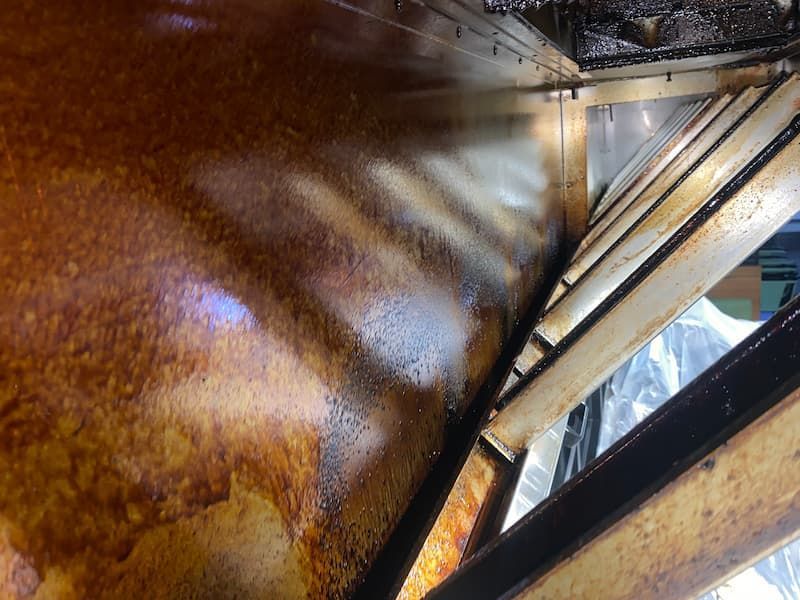
- Canopy cleaning and degreasing: Full removal of grease deposits from canopy surfaces, baffle structures, and internal channels
- Grease filter cleaning: Soak-tank degreasing of all grease filters, or replacement where required, with rebalancing for optimal airflow
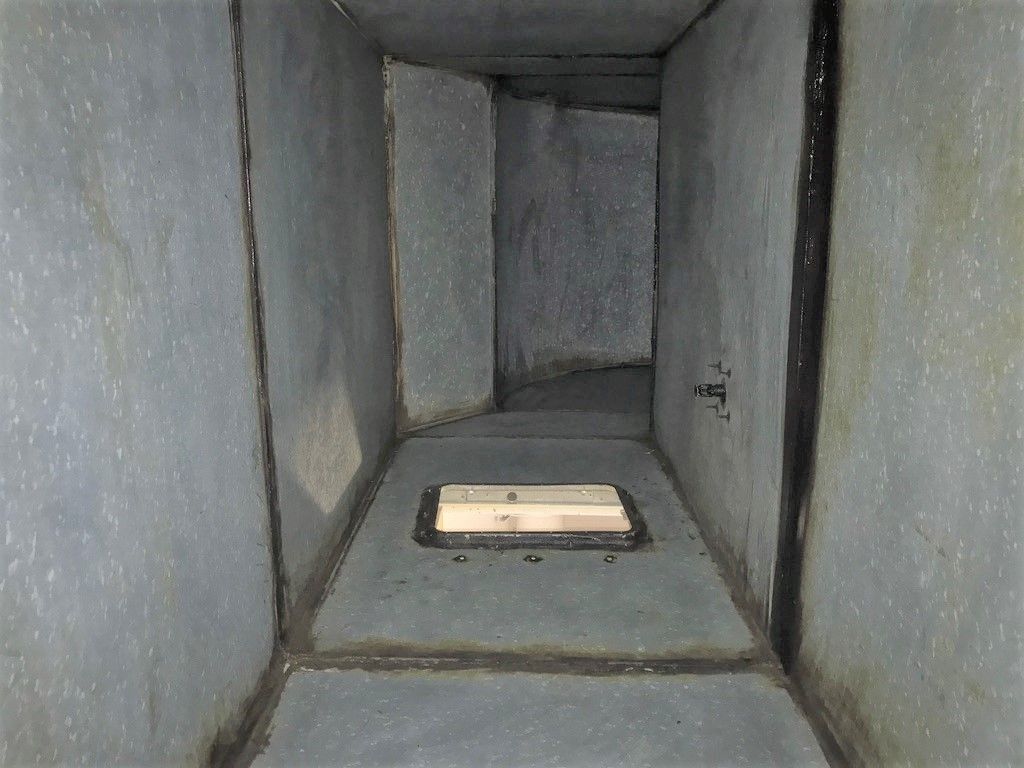
- Kitchen ductwork cleaning: Professional duct degreasing using high-pressure, food-safe chemicals across all accessible duct sections, including horizontal runs
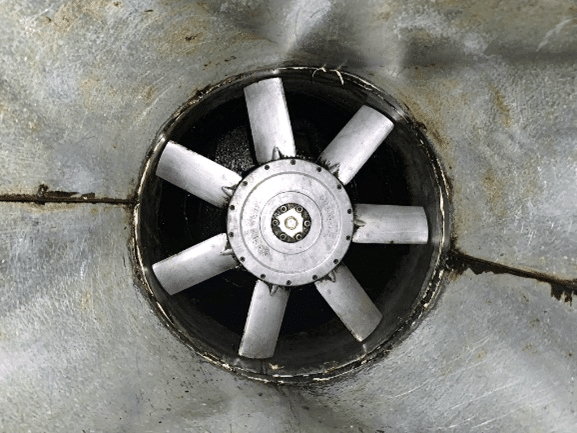
- Exhaust fan service: Full degreasing of fan blades, motor housing, belt and bearing inspection, and airflow rebalancing
- Rangehood and canopy inspection: Pre- and post-service condition reporting with grease-depth measurement
- AS 1851-2012 compliance certification: Full documentation package including before-and-after photos, service log, and insurance-ready records
- Bathroom and general exhaust fan cleaning: Available as part of a whole-of-building hygiene programme
- After-hours and overnight scheduling: Available across the Gold Coast to avoid disruption to trading
Ensure Safety with Expert Kitchen Exhaust Cleaning
Under Work Health and Safety legislation, every commercial kitchen operator and building manager in Queensland has a legal duty to keep their exhaust system safe and maintained. This duty does not rest solely with the head chef or kitchen staff. If you are the business owner, property manager, facilities manager, or body corporate responsible for the premises, you share that obligation. A grease-laden exhaust system is not just a maintenance issue. It is a WHS compliance failure with real legal and financial consequences.
Efficient Hygiene Services has spent over 10 years helping Gold Coast businesses meet their obligations under AS 1851-2012. Our team of licensed, fully insured, and police-checked technicians carries out every service to the standard required for council inspections, insurance assessments, and Queensland Fire Department compliance. If you cannot confirm when your exhaust system was last professionally cleaned and documented, it is time to get in touch.
Call 1300 222 357 or request a free same-day quote online.
Protecting Your Kitchen With Safe, Compliant Exhaust Maintenance
Exhaust cleaning on the Gold Coast is a legal obligation, not just a housekeeping task. Grease and fat deposits inside commercial kitchen exhaust systems are among the most common causes of preventable fires in food service businesses across Australia. Every time your kitchen operates, airborne grease particles travel through the canopy, into the filters, along the ductwork, and through the exhaust fan. Without regular professional cleaning, those deposits build up to dangerous levels, creating a fuel source that can ignite and spread fire rapidly through your entire ventilation system.
Efficient Hygiene Services works with restaurant and cafe owners, hotel and club operators, facilities managers, body corporates, aged care kitchen supervisors, school and university catering teams, and franchise operators across the Gold Coast. We understand the pressures of keeping a commercial kitchen compliant while managing day-to-day operations, which is why we schedule all services around your trading hours, including after-hours and overnight cleans that cause zero disruption to your business.
Our team cleans every surface of your exhaust system:
- Grease filters
- Canopy and stainless steel surfaces
- Ductwork, including all horizontal runs and concealed sections
- Exhaust fan blades, housing, and motor casing
- Fan shroud and surrounding components
Every service is documented with before-and-after photos, grease-depth measurements, a full service log, and an AS 1851-2012 compliance certificate. This paperwork is essential for your insurance cover and for any regulatory audit or council inspection.
- Fire outbreaks and severe property damage
- Injuries and workplace safety breaches
- Invalidated insurance claims
- Business shutdowns
- Significant financial liability
Maintaining a clean exhaust system isn’t optional — it’s a legal requirement, an insurance requirement, and a responsible business practice.

Common Questions About Kitchen Exhaust Cleaning on the Gold Coast
How often should a commercial kitchen exhaust be cleaned on the Gold Coast?
Cleaning frequency depends on your kitchen type and daily hours of operation. High-use kitchens running 12 or more hours per day, such as fast food restaurants and food courts, typically require quarterly cleaning or more frequently. Moderate-use kitchens operating 6 to 12 hours per day, including cafes and pubs, usually require semi-annual cleaning. Light-use kitchens operating under 6 hours per day may only need an annual clean. Efficient Hygiene Services will assess your kitchen and recommend the right schedule.
Is kitchen exhaust cleaning a legal requirement in Queensland?
Yes. Commercial kitchen exhaust cleaning is required under Australian Standard AS 1851-2012 and Queensland Work Health and Safety legislation. Business owners, building managers, and body corporates are all legally obligated to ensure their exhaust system is maintained, inspected, and documented at the required intervals. Failure to comply can result in insurance claims being voided, WHS penalties, or business shutdown following a fire authority inspection.
What does a professional exhaust clean include?
A professional exhaust clean from Efficient Hygiene Services covers every component of the system: canopy surfaces and baffle structures, all grease filters, accessible ductwork including horizontal runs, exhaust fan blades and motor housing, and a full airflow test on completion. Every service includes a before-and-after photo record, grease-depth measurement, and an AS 1851-2012 compliant certification package suitable for insurers, auditors, and council inspectors.
How much does kitchen exhaust cleaning cost on the Gold Coast?
The cost of exhaust cleaning depends on the size of your system, the number of canopies, the length and complexity of your ductwork, and your current grease load. Efficient Hygiene Services provides a free, same-day quote with no call-out fee so you can get an accurate price before committing. We offer competitive rates across the Gold Coast and South East Queensland, and ongoing maintenance contracts are available for businesses that want predictable, scheduled compliance at a fixed cost.
Can my staff clean the kitchen exhaust in-house?
In-house staff can manage daily surface cleaning of visible canopy areas, but they cannot produce the AS 1851-2012 compliant certification that insurers and regulators require. Professional duct and fan cleaning also requires specialised equipment and access methods that are not available to in-house teams. If an employee is injured while attempting to clean a kitchen exhaust system, the business owner carries legal liability. Professional cleaning from Efficient Hygiene Services removes that risk entirely.

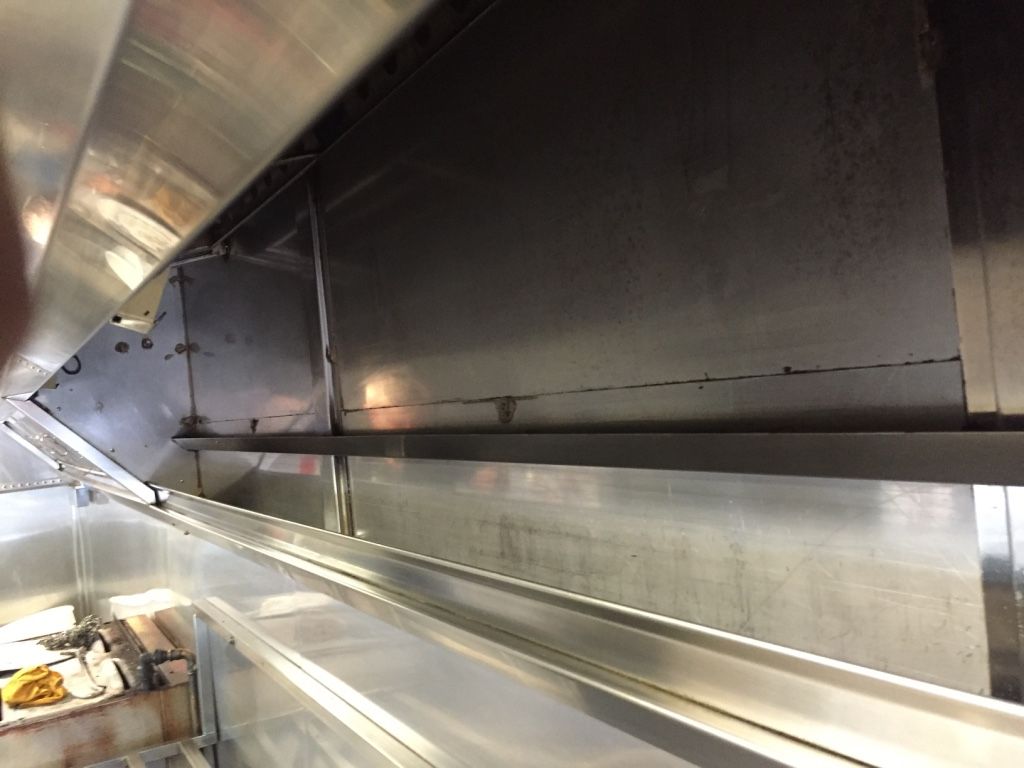
Understanding Commercial Kitchen Exhaust Systems and Cleaning Requirements
A commercial kitchen exhaust system is designed to extract smoke, heat, steam, and airborne grease from your cooking environment and expel it safely out of the building. When properly maintained, it protects your staff, maintains air quality, and prevents dangerous grease accumulation. When neglected, it becomes one of the most significant fire and compliance risks in any food service business.
Efficient Hygiene Services cleans the full exhaust system, not just visible canopy surfaces. Our technicians understand how every component interacts, and we know that grease deposits in one part of the system accelerate buildup elsewhere if the full system is not addressed.
Key system components and why each one matters:
- Canopies: The primary capture point for airborne grease, steam, and smoke from the cooking line. Grease builds rapidly on canopy surfaces and inside baffle structures. Regular canopy degreasing is the baseline of any compliant kitchen hygiene programme.
- Grease filters: These trap large grease particles before they enter the ductwork. In a high-volume Gold Coast kitchen, filters may need cleaning weekly or monthly. Blocked filters reduce airflow and push contamination further into the system.
- Ductwork: Hidden from view and often carrying the heaviest deposits in the entire system. Horizontal duct runs can develop grease accumulations of several millimetres in depth. Full duct cleaning requires specialised access equipment and certified technicians.
- Exhaust fans: The fan removes grease-laden vapours from the entire system. Grease on fan blades, inside the housing, and around the motor reduces airflow, increases operating temperature, and creates a direct fire hazard. Fan degreasing must be part of every full system service.
Legal and Insurance Requirements
Commercial kitchen exhaust cleaning on the Gold Coast is governed by clear Australian standards and workplace legislation. Your obligations as a business owner or building manager are not discretionary.
Your legal obligations include:
- Australian Standard AS 1851-2012: Sets out minimum inspection, maintenance, and record-keeping requirements for fire protection systems including kitchen exhaust systems. Compliance is mandatory and must be documented.
- Work Health and Safety legislation: Queensland WHS laws require employers to identify and eliminate foreseeable hazards. A grease-laden exhaust system is a foreseeable fire hazard, and failure to address it constitutes a breach of duty.
- Local council and fire authority requirements: Gold Coast businesses may also be subject to additional requirements from the Queensland Fire Department or local council inspectors.
From an insurance standpoint, most commercial property and business interruption policies require proof of regular, AS 1851-2012 certified cleaning. Efficient Hygiene Services provides a complete documentation package after every service, including the compliance certificate, before-and-after photographs, grease-depth records, and an insurance-ready service log. Without this documentation, you are exposed in the event of a claim or audit.
Safety and Risk Reduction in Commercial Kitchen Exhaust Cleaning
Regular professional exhaust cleaning delivers measurable safety benefits for every Gold Coast commercial kitchen. The impact goes well beyond fire prevention.
What a clean, maintained exhaust system achieves:
- Dramatically reduced risk of grease ignition in canopies, ducts, and fan housings
- Improved indoor air quality for kitchen staff working long shifts in enclosed environments
- Reduced smoke and cooking odours backing into the kitchen during peak service
- Better energy efficiency from fans operating without the resistance of grease deposits
- Extended equipment lifespan, particularly for exhaust fan motors and bearings
- Stronger WHS compliance and a cleaner maintenance record for insurance assessments
If you are not sure whether your Gold Coast kitchen poses a safety risk right now, Efficient Hygiene Services offers a free, no-obligation assessment. We will inspect the system, measure grease depth, and give you an honest picture of your current compliance status before you commit to a service.

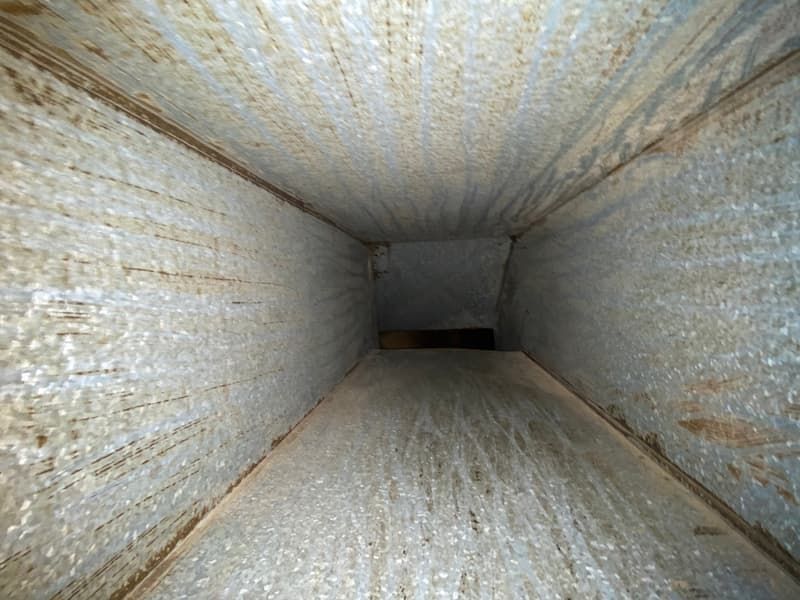
Usage-Based Cleaning Schedules
Efficient Hygiene Services recommends the following as a general guide based on kitchen usage:
Heavy-use kitchens (12 to 16 or more hours per day):
- Includes fast food restaurants, food courts, and high-volume dining venues
- Recommended: Quarterly cleaning or more frequently depending on grease load
Moderate-use kitchens (6 to 12 hours per day):
- Includes cafes, pubs, clubs, and mid-size restaurants
- Recommended: Semi-annual cleaning
Light-use kitchens (2 to 6 hours per day):
- Includes small cafes, low-volume corporate or school kitchens
- Recommended: Annual cleaning
Component-Specific Guidelines
Component-specific cleaning intervals within each service:
- Grease filters: Weekly to monthly depending on usage and grease output
- Canopies: Quarterly to annually depending on kitchen type
- Ductwork: Professionally cleaned at minimum annually, or more frequently for heavy-use kitchens
- Exhaust fans: Cleaned at every major service interval
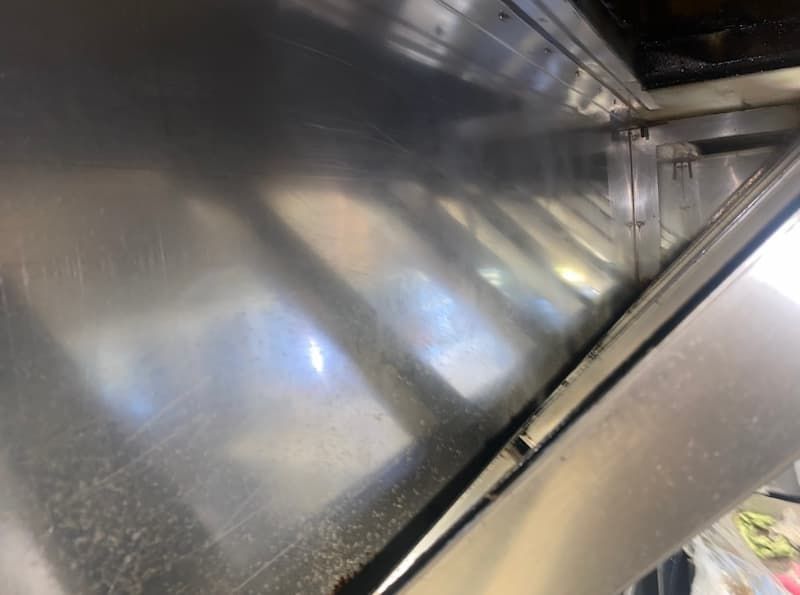
Factors Affecting Cleaning Frequency
Certain cooking methods and kitchen conditions accelerate grease buildup and may require cleaning more frequently than the usage-based schedule above suggests.
Factors that increase cleaning frequency:
- Heavy frying and deep-frying operations generate high volumes of airborne grease
- Wok cooking and charcoal grilling produce carbonised deposits that are harder to remove and require specialised degreasers
- Poor ventilation or undersized exhaust systems cause faster accumulation inside canopies and ducts
- Equipment manufacturer warranties may specify more frequent cleaning than the AS 1851-2012 minimums
- Kitchens that have recently failed an inspection may need a more intensive cleaning programme to rebuild compliance documentation
If you are not sure whether your current cleaning frequency is adequate,
Efficient Hygiene Services can carry out an assessment and recommend a tailored maintenance schedule. We work with business owners and facilities managers across Ashmore, Helensvale, Broadbeach Waters, and the wider Gold Coast to build practical compliance programmes that suit your operation and your budget.
Professional Cleaning Process and Certification
Professional commercial kitchen exhaust cleaning is a detailed, multi-step process that covers every component of the system and produces certified documentation on completion. It is not comparable to in-house surface cleaning. Without the right equipment, training, and access to ductwork and fan housings, in-house staff cannot achieve the standard required for AS 1851-2012 compliance, and no insurer or regulator will accept the result.
Step-by-Step Cleaning Process
- Pre-cleaning inspection: Full assessment of system condition, grease-depth measurement, and before-photos for insurance and compliance documentation.
- System shutdown and equipment protection: All cooking equipment and nearby surfaces are protected before cleaning begins.
- Canopy and stainless steel surface cleaning: Full degreasing of all canopy surfaces including internal baffle structures and hidden deposits.
- Filter cleaning or replacement: Soak-tank degreasing of all grease filters, or replacement where required, with rebalancing for optimal airflow.
- Duct cleaning using specialised equipment: Multiple access points opened to reach all duct sections. Carbonised and liquid grease deposits removed using high-pressure, food-safe degreasers. Duct walls cleaned to a clean-to-bare-metal standard.
- Exhaust fan degreasing and mechanical checks: Fan blade degreasing, motor housing clearance, belt and bearing inspection, and airflow rebalancing.
- System reassembly and airflow testing: All components reassembled and airflow tested to confirm efficient operation.
- Post-cleaning inspection and certification: Final inspection carried out before the compliance documentation package is issued to the client.
Certification
Every Efficient Hygiene Services kitchen exhaust clean produces a complete documentation package:
- AS 1851-2012 compliant compliance certificate
- Before-and-after photographs of all components
- Grease-depth measurement report
- Service log formatted for council, insurer, and auditor requirements
- Insurance-ready maintenance records
This certification is not just useful to have on file. For Gold Coast businesses, it is the difference between a valid insurance claim and a voided policy, and between passing a fire authority inspection and receiving a non-compliance notice.
Professional Service vs. In-House Cleaning
| Feature | Professional Service | In-House Cleaning |
|---|---|---|
| Compliance Certification | AS 1851-2012 compliant | Not accepted |
| Duct & fan access | Specialised equipment | Limited |
| Fire safety | Meets all standards | High liability |
| Insurance Documentation | Fully compliant | Often invalid |
| Risk to business | Low | High |
Professional cleaning by
Efficient Hygiene Services includes
coil flushing, antimicrobial treatments, fan and drain cleaning, and full internal inspection—services impossible to replicate safely without training.
Real Life Case Study: Preventing a Major Fire Hazard in a High-Volume Gold Coast Restaurant
One of our long-standing clients operates a large, high-volume restaurant on the Gold Coast, running 14 hours a day, seven days a week, across multiple deep fryers, chargrills, and woks. Despite a diligent in-house cleaning routine, grease buildup inside the ductwork and canopy had progressed well beyond safe and compliant limits.
After noticing reduced airflow and increased smoke on the cook line, they contacted Efficient Hygiene Services for a full AS 1851-2012 inspection and assessment.
Initial findings from the inspection:
- Grease deposits exceeding 2mm in depth inside horizontal ductwork
- Carbonised grease buildup inside the exhaust fan housing
- Blocked grease filters that had not been effectively degreased
- Dangerous internal deposits behind canopy baffles invisible from the surface
- A measurable drop in airflow indicating mechanical stress on the fan motor
Efficient Hygiene Services carried out a full commercial kitchen exhaust clean overnight, covering pre-cleaning inspection and before-photography, canopy and filter restoration with soak-tank degreasing, full ductwork degreasing back to a clean-to-bare-metal standard, exhaust fan blade and motor housing degreasing with mechanical checks, and a complete AS 1851-2012 compliance documentation package on completion.
Results in the first week:
- Airflow improved by over 40%, with cooks immediately noticing clearer conditions and less smoke on the line
- Exhaust fan noise levels dropped as the motor no longer struggled under load
- Fire risk dramatically reduced, confirmed by the insurer during a workplace safety audit two months later
- Equipment operating temperature reduced, extending fan motor lifespan
- WHS compliance fully restored with AS 1851-2012 record-keeping in place
- Staff morale improved with the cook line noticeably clearer during peak service
Following these results, the client signed a quarterly maintenance contract with Efficient Hygiene Services covering routine canopy and filter cleaning, scheduled duct and fan cleans, ongoing photographic documentation, annual compliance reports, and priority response for inspections and emergency assessments.
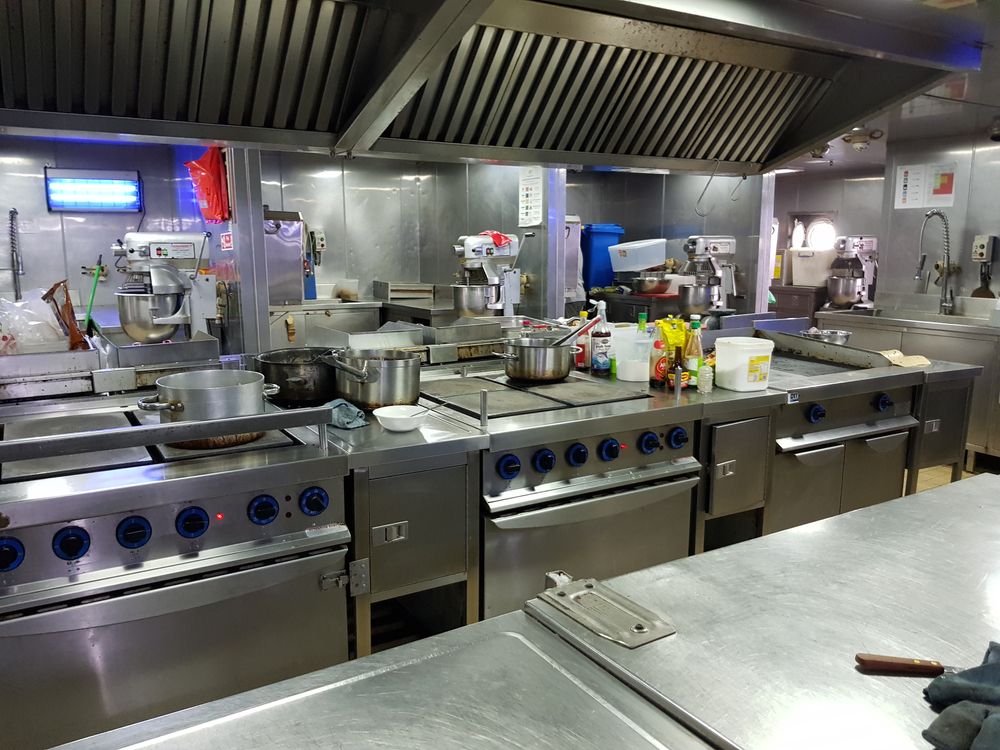
Common Challenges and Solutions
Scheduling around kitchen hours: Efficient Hygiene Services offers after-hours and overnight cleaning across the Gold Coast to avoid any disruption to your trading. We arrive after service ends and have the kitchen ready before your team arrives in the morning.
Accessing deep ductwork: Horizontal duct runs and roof-mounted fan assemblies require certified technicians, compliant access panels, and specialised cleaning equipment. Our team is trained and equipped for full duct access across complex multi-story buildings and roof-mounted installations throughout Southport, Broadbeach Waters, and Helensvale.
Insurance and compliance documentation: If you have received a request from your insurer for cleaning records, or if you are preparing for a council or fire authority inspection, Efficient Hygiene Services provides a complete documentation package after every service. We can also assist with historical records and help you build a compliant maintenance schedule going forward.
Why Gold Coast Businesses Trust Efficient Hygiene Services
Efficient Hygiene Services has been providing commercial kitchen exhaust cleaning across the Gold Coast for over 10 years. Our technicians are fully trained, police-checked, and carry full public liability insurance on every job. We work in accordance with Australian Standard AS 1851-2012 and AS 1668.2, and every service produces a complete compliance documentation package accepted by insurers, councils, and fire authorities. We offer a free assessment with no call-out fee, flexible scheduling including after-hours and overnight cleans, and a transparent quoting process. Businesses across Ashmore, Surfers Paradise, Robina, Southport, and Tweed Heads have trusted us to keep their kitchens safe, compliant, and operational.
Quick Facts: Kitchen Exhaust Cleaning Gold Coast
How often should a commercial kitchen exhaust be cleaned?
Frequency depends on kitchen usage. Heavy-use kitchens operating 12 or more hours per day need quarterly cleaning. Moderate-use kitchens need semi-annual cleaning. Light-use kitchens may only need annual cleaning. AS 1851-2012 sets the minimum standard.
Is exhaust cleaning a legal requirement? Y
Yes. In Queensland, commercial kitchen exhaust cleaning is required under AS 1851-2012 and Work Health and Safety legislation. Business owners and building managers are legally obligated to maintain and document their exhaust systems.
What does the cleaning include?
Every Efficient Hygiene Services clean covers canopy degreasing, filter cleaning or replacement, ductwork degreasing, exhaust fan servicing, airflow testing, and a full AS 1851-2012 compliance documentation package.
Do you work after hours?
Yes. Efficient Hygiene Services offers after-hours and overnight exhaust cleaning across the Gold Coast so your business is not disrupted during trading.
Where do you service on the Gold Coast?
We service all Gold Coast suburbs including Ashmore, Southport, Surfers Paradise, Broadbeach, Robina, Helensvale, and Tweed Heads, as well as Brisbane and the Sunshine Coast.
Next Steps
Regular professional exhaust cleaning is one of the most important maintenance commitments any Gold Coast commercial kitchen operator can make. It protects your staff, your premises, your insurance cover, your compliance standing, and your ability to trade without interruption. The cost of preventative cleaning is a fraction of the cost of a fire, a failed inspection, or a voided insurance claim.
Efficient Hygiene Services has been helping Gold Coast, Brisbane, Sunshine Coast, and Tweed Heads businesses stay safe and compliant for over 10 years. Our team works around your schedule, documents everything, and provides the compliance paperwork you need to satisfy insurers, auditors, and fire authorities.
If you are a business owner, building manager, facilities manager, or body corporate looking for a reliable exhaust cleaning partner on the Gold Coast, here is how to get started:
- Call 1300 222 357 for a free, same-day quote with no call-out fee
- Book a full system inspection to assess your current compliance status
- Request a tailored quote based on your kitchen type and usage
- Set up an ongoing maintenance and certification schedule that suits your trading hours
Our Real Customer Reviews
We had our exhaust cleaned by Efficient Hygiene Services, and the experience was absolutely fantastic from start to finish. The team was professional, polite, and incredibly thorough. They arrived on time, explained everything clearly, and left the area spotless. It’s so refreshing to deal with a company that takes real pride in their work. Great clean service — we’ll definitely be using EHS again and highly recommend them to anyone looking for quality and professionalism!
We have been working with Efficient Hygiene Services for years in both our locations for cleaning our exhaust systems. Very professional service, good workmanship which is quite rare these days. They are always on time, prices are reasonable and we always receive photos of before and after. Highly recommended EHS.
The 2 technicians that completed the air conditioning deep cleans at my child care centre were outstanding. We have had many other companies complete our air con cleaning but none are as good as Efficient Hygiene Services.! We won’t trust anyone else. Our air cons are running more efficient and smell amazing.
Our retail business has been using Efficient Hygiene Services for 5 years. The service and quality of work is always outstanding. I highly recommend using their services. If you own a restaurant wanting your exhaust duct cleaned regularly or if you have air conditioning ducts that need cleaning for better air quality.
Frequently Asked Questions
How often should the kitchen exhaust be cleaned?
The advised frequency of cleaning will vary, depending on the type of cooking that takes place and how often the system is used. This could be monthly, quarterly or semi-annually.
Is it a legal requirement to have the commercial kitchen exhaust cleaned?
Yes, it is. Kitchen exhaust cleaning falls under Work Health and Safety regulations. Australian Standards 1851:2012 also outlines a series of minimum inspection, maintenance and record-keeping requirements for kitchen exhaust systems.
Can my employees clean the kitchen exhaust?
It’s best to leave kitchen exhaust cleaning to the professionals. This is because cleaning kitchen exhausts takes special training and equipment. If your employee sustains an injury whilst cleaning, you will be legally liable.
How often should I get my kitchen exhaust system cleaned?
The frequency of cleaning depends on the volume and type of cooking. High-use commercial kitchens typically require cleaning every 3 to 6 months, while lower-use kitchens may need it once a year. Adhering to a regular maintenance schedule ensures compliance with fire and health regulations.
Do you provide residential kitchen exhaust cleaning?
Yes, while we primarily focus on commercial and industrial exhaust fan cleaning in Brisbane and the Gold Coast, we also offer residential services upon request. Contact us to discuss your specific cleaning needs.
How does a dirty kitchen exhaust system affect my business?
A neglected exhaust system can lead to poor air quality, increased fire risks, non-compliance with health and safety regulations, and inefficient airflow, which may impact staff comfort and productivity. Keeping it clean ensures a safe and efficient working environment.
What areas do you service?
We offer exhaust fan cleaning on the Gold Coast, Brisbane, Sunshine Coast, and Tweed Heads. We also have a technician in Sydney but do not operate between Sydney and Tweed Heads. Keep your kitchen safe, compliant, and operating efficiently with our professional cleaning solutions.
How can I book a kitchen exhaust cleaning service?
Booking is easy! Contact us via phone or visit our website to schedule a professional kitchen exhaust cleaning service. Our team will work with you to arrange a convenient time that minimises disruption to your business. For high-quality exhaust fan cleaning in Brisbane and kitchen exhaust cleaning on the Gold Coast, contact us today!